Administrator Pranvera Gagani
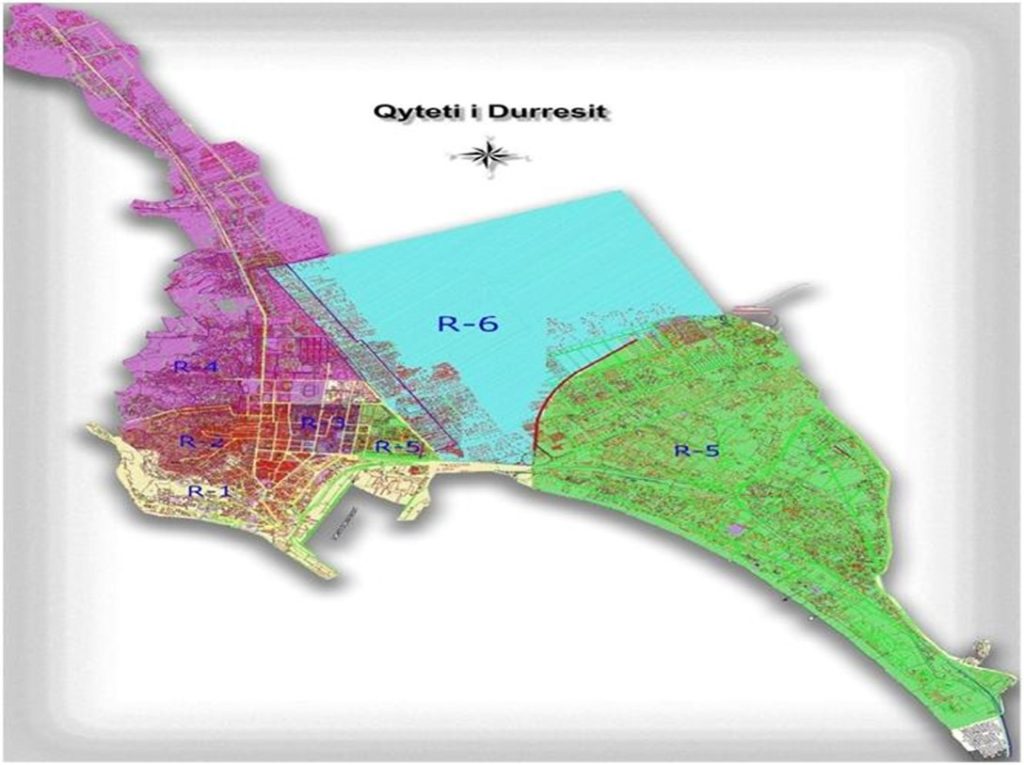
Title | Administrative Unit No. 1 |
Area km2 | 2.98 |
Population | 28917 |
Neighborhoods: Nr. 1,2,3,4
Phone: +355673966496
Email: pranvera.gagani@durrës.gov.al
Administrator Alketa Veseli
Title | Administrative Unit No. 2 |
Area km2 | 1 |
Population | 29361 |
Neighborhoods: Nr. 6,7,9,10,11
Phone: +355686026066
Email: alketa.veseli@durres.gov.al
Administrator Petrit Ismailati
Title | Administrative Unit No. 3 |
Area km2 | 0.6 |
Population | 27434 |
Neighborhoods: 5,12,16
Phone: +355693464644
Email: petrit.ismailati@durres.gov.al
Administrator Frederik Musai
Title | Administrative Unit No. 4 |
Area km2 | 10.32 |
Population | 58907 |
Neighborhoods:8,15,18
Phone: +355672043946
Email: frederik.musai@durres.gov.al
Administrator Redion Tabaku
Title | Administrative Unit No. 5 |
Area km2 | 15.8 |
Population | 87298 |
Neighborhoods: 13,14,17
Phone: +355686022222
Email: redion.tabaku@durres.gov.al
Administrator Davide Ndoj
Title | Administrative Unit No. 6 |
Area km2 | 15.6 |
Population |
|
Phone: +355697630561
Email: davide.ndoj@durres.gov.al
Administrator Emirian Bafti
Title | Ishëm |
Area km2 | 91 |
Population | 9492 |
Phone: +355682022933
Email: emirian.bafti@durres.gov.al
Administrator Erjon Xhili
Title | Sukth |
Area km2 | 53 |
Population | 30849 |
Phone: +355682027057
Email: erjon.xhili@durres.gov.al
Administrator Rejdi Shehu
Title | Manëz |
Area km2 | 43.25 |
Population | 12624 |
Phone: +355676199666
Email: rejdi.shehi@durres.gov.al
Administrator Julian Maku
Title | Katund I ri |
Area km2 | 54 |
Population | 16845 |
Phone: +355694874868
Email: juljan.marku@durres.gov.al
Administrator Fiqiri Dema
Title | Rrashbull |
Area km2 | 59 |
Population | 37076 |
Phone: +355699128286
Email: fiqir.dema@durres.gov.al
Durrës is the city with the greatest economic activity after Tirana, but rapid and uncritical urbanization has created a series of problems that hinder sustainable development.
General information
Geographical Area: The Municipality of Durrës is bordered to the west by the Adriatic Sea, to the north by the municipality of Kurbin, to the east by the municipalities of Krujë, Vorë and Shijak, and to the south by the municipality of Kavajë.
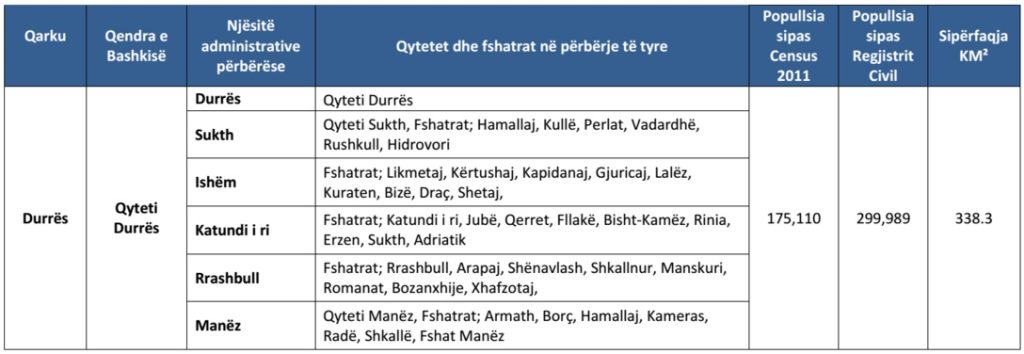
Population: According to the 2011 census, 175,110 people live in the territory of the new municipality of Durrës, while according to the civil registry, the resident population is 299,989 people. With an area of 338.30 square kilometers, the population density according to the 2011 Census data is 517 inhabitants km2 while according to the Civil Registry it is 680 inhabitants km2.
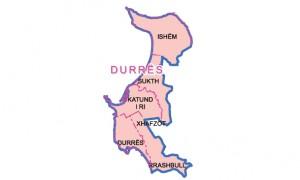
This municipality consists of six administrative units, which are: Durrës, Sukthi, Ishmi, Katundi i Ri, Rrashbulli and Manëz.
All units of the new municipality are part of the Durrës district, Durrës region. The territory of the new municipality includes three cities, Durrës, Sukth and Manëz, as well as 40 villages. To see the full list of cities and villages of this municipality, see the table.
The municipality of Durrës extends along the sea coast, from the mouth of the Ishëm River in the north to the border with Kavaja in the south. The long coastline that is added to the city of Durrës emphasizes the feature of this municipality as a tourist area, since in addition to the Durrës beach, it also includes the entire Lalëz Bay and Cape Rodonit, which until now have been part of the municipalities of Ishëm, Sukth, Katund i Ri and Rrashbull.Durrës also has the largest port in Albania, where over 90 percent of the entire port loading and unloading volume is processed, making it the most important commercial hub in the country.
Due to the convenience of the port, Durrës has also developed as an important manufacturing city, while the lure of tourism has caused a boom in the construction sector over the past two decades. Durrës is an area with a high rate of internal migration, which has led to rapid and informal expansion of the city in the former Këneta area and along the coastline to the south of the city. Durrës is also an important archaeological site, as several layers of ancient civilizations lie beneath the current city. Archaeological discoveries are numerous, while construction in recent decades has damaged part of this heritage.
With over 5,600 economic activities and 15% of foreign investments, Durrës is ranked second as the country's strongest economy, after Tirana.Summer and cultural tourism is an industry with a significant impact on the economy of Durrës. With over 750,000 visitors per year, this is the most important area of the country in terms of mass tourism. According to the Durrës Regional Labor Office, the active labor force is estimated at around 54,000 people. The unemployment rate for the Durrës district is around 10.38%, with unemployment being more prevalent among women. The private sector has employed around 31.3%, followed by the private agricultural sector with 36.7%, and the state sector with 21.3%.
Rapid urbanization has created serious problems with the encroachment of green spaces and damage to the archaeological heritage of the city of Durrës, while the rapid urbanization of the coastline has caused an overload of public services and difficulties in developing the necessary infrastructure.
Durrës is one of the most problematic areas regarding water supply, because the current water sources are limited and located at a considerable distance, while the new municipality does not have other nearby clean sources to increase the water supply. Unregulated constructions have overloaded the existing urban infrastructure, such as wastewater sewers, roads, and public parking, and also threaten to harm the city’s future as a tourist destination.
Despite the overload of the current urban area with constructions, the expansion of the municipality to include the communes along the coastline creates an additional challenge, as the Lalzi Bay area has also begun to face construction pressures, both authorized and unauthorized. Balancing the need for tourism development with the need to preserve a clean environment and turning tourism into a sustainable activity is the main challenge of the new municipality.
The construction of necessary infrastructure in urbanized areas over the last two decades, as well as the building of wastewater treatment plants to prevent coastal pollution, are considered challenges of particular importance. In recent years, road connections to the outskirts of the city of Durrës have been established, which are still insufficient to handle the traffic flow.
The connection of the constituent villages of the new municipality to the city of Durrës through public transport is a solution that serves both tourism and the residents themselves. Extending waste collection services throughout the territory of the new municipality is essential, especially because part of the coastline, such as Rodoni Cape, is littered with plastic waste carried by rivers. The development of agriculture in the rural areas surrounding the current municipality is an opportunity, particularly regarding specialized food products for the tourism market.