
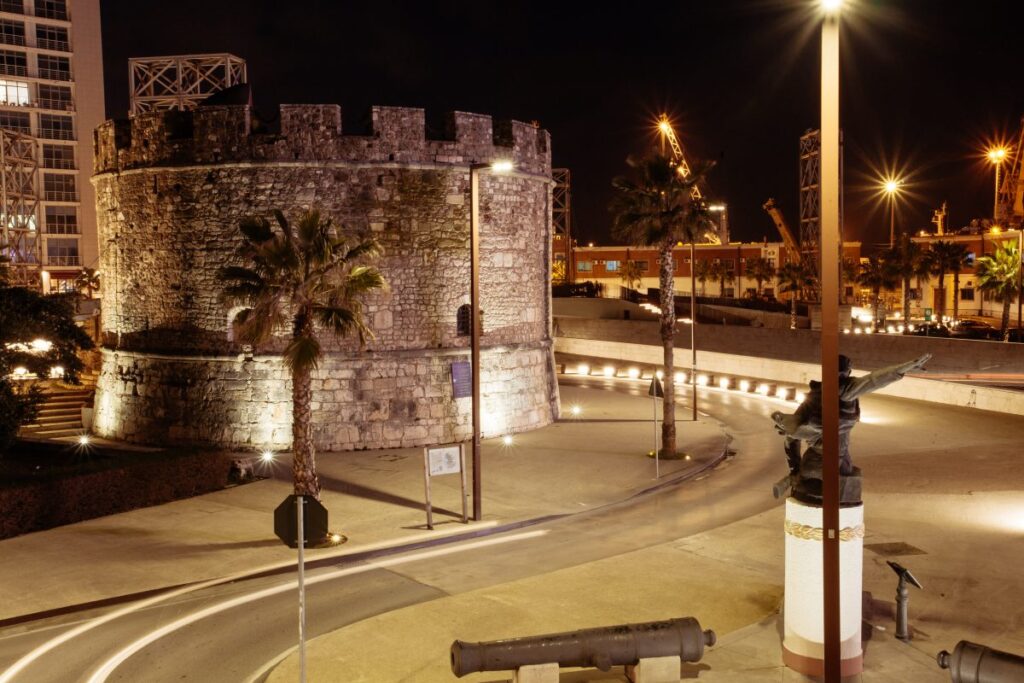
The city of Epidamnus - Dyrrachium was built by the Illyrians Taulantes, the Swallows in the 13th-11th centuries BC. In the conditions of a Mediterranean climate, the most suitable area for habitation was that of the Erzen River and the Western Lowlands around it. On the coast of the Gulf of Durrës, the first center or Limani named Dyrrachium was established. According to ancient authors, this city was founded by two kings of Illyrian origin named Dyrah and Epidamnus. During the time of Emperor Anastasius I (491-519) and Justinian I [527-565), the city underwent significant transformations in its urban structure, taking on the features of a typical Byzantine-Christian city.
In the 11th-15th centuries, the Albanian State was known as the State of Arbri. This state reached its peak during the reign of George Kastrioti. According to Ottoman chroniclers of the 16th century, Durrës, or as they called it, “The Second Constantinople,” was conquered by the Turks on August 13, 1501. Only in the 17th century did the city begin to recover, becoming a center of transit trade and the main port of Central Albania.
On November 26, the Independence flag was raised in Durrës by a group of patriots led by the patriot Ismail Qemali. Turkish rule had come to an end, but it seems that the city was coveted by other invasions: the Serbian invasion (1913), the Austro-Hungarian invasion (1916) and the Italian invasion (1918). During the years of the Albanian monarchy (1924-1939), Durrës gained a new lease of life and the noble citizens of Durrës made their city a model of capitalist economic development. On April 7, 1939, the city and its surroundings were occupied by Italian and German army troops and on November 14, 1944, Durrës was liberated. The period of the socialist system (1945-1990) includes investments in several branches of industry, the collectivization of agriculture, the massification of education, and the construction of a series of social and cultural facilities. In the early 1990s, the first norms of the democratic system began to emerge, with many problems for the transition phase, but with prospects for the future. The new system and the economic reforms that were implemented in Albania and Durrës after 1990 brought significant transformations in economic life.