Durrës Today

Old Durrës

Ҫfare te vizitosh ne Durres

Today, the city of Durrës lies directly above the ancient ruins of Epidamnus. Founded around 627 BC, Durrës is one of the most important cities in Albania and the Adriatic region, rich in history, architecture, and archaeological sites such as the Amphitheatre, City Defensive Walls, Byzantine Forum, Venetian Tower, Ancient Roman Baths, the Basilica of St. Michael in Arapaj, Skanderbeg Fortifications at Cape of Rodoni, and more. Additionally, Durrës possesses an underwater heritage, which adds further value to the city and can significantly promote the development of archaeological tourism.
Mbas reformes së re administrativo-territoriale, qyteti i Durrësit ka një sipërfaqe prej 341.9 km2 dhe një vijë bregdetare prej 64 km. Durrësi numëron rreth 20 munumente të trashëgimisë kulturore dhe 12 objekte të rëndësisë së veçantë, të cilat janë të vizitueshme përgjatë gjithë vitit si nga vizitorët/turistët vendas ashtu edhe ata të huaj.
So, what can we visit in Durrës?
Follow Us:

Informacion Praktik Per Turistët

Front Map

Back Map

Shkarkoni broshuren e Guides Turistike

Shkarko broshuren e Trashegimise Kulturore

Shkarko harten turistike te qytetit

Digital Map of Cultural Heritage

Ҫfare te vizitosh ne Durres

Today, the city of Durrës lies directly above the ancient ruins of Epidamnus. Founded around 627 BC, Durrës is one of the most important cities in Albania and the Adriatic region, rich in history, architecture, and archaeological sites such as the Amphitheatre, City Defensive Walls, Byzantine Forum, Venetian Tower, Ancient Roman Baths, the Basilica of St. Michael in Arapaj, Skanderbeg Fortifications at Cape of Rodoni, and more. Additionally, Durrës possesses an underwater heritage, which adds further value to the city and can significantly promote the development of archaeological tourism.

Following the new administrative-territorial reform, the city of Durrës covers an area of 341.9 km² and has a coastline of 64 km.

Durrës counts around 20 cultural heritage monuments and 12 sites of special significance, all of which are open to visitors year-round, attracting both domestic and international tourists.

So, what can we visit in Durrës?

Follow Us:
DURRES AMPHITHEATER
The Durrës Amphitheater is a unique public monument in our country. It was built near the traditional city center, on plain terrain and partly on a hill. It is considered an engineering and architectural colossus of ancient times and the work of local masters. It has the shape of an ellipse with a diameter of 136m and a height of about 20m. It was built at the beginning of the 2nd century AD, during the time of the Roman emperor Trajan (98-117). It housed about 15-20 thousand spectators who watched the gladiator matches. The amphitheater had the main entrance from the north and an exit to the south on the same axis. The eastern facade from the city center was two-story with arches and columns and above them a decorative structure with windows. The discovery of the arena would also clarify the function of the amphitheater. Games in ancient amphitheaters were banned by the Roman emperor Honorius in 404 AD. The discovery of the amphitheater began in 1966 and lasted until 1970. Parallel to the monument, medieval tombs were discovered in the arena area. In the following years, several expeditions were carried out, which supplemented the documentary and architectural data on this monument.
CHURCH OF THE AMPHITHEATRE
After the games in the amphitheater were interrupted, around the 5th-6th centuries AD, a small church (chapel) was built, where religious ceremonies and funerals of the Christian groups of Durrës were held. Initially, the church was decorated with frescoes. Its longevity testifies to later interventions (6th-7th centuries), decorating both sides, southern and western, with unique mural mosaic panels. This mosaic is dedicated to Saint Stephen, martyr of the city of Durrës. Next, Saint Mary is presented as a Byzantine empress surrounded by two angels, the first with an inscription at the top and two miniature attendants at the feet of the figures. The western side preserves fragments of two saints, Saint Irene and Saint Sophia with their respective names. The eastern gallery, which is decorated with a fresco with the figure of Saint Gabriel, also served as a place of refuge for Christian communities.
DURRES CASTLE - THE CITY WALLS
The city of Durrës was protected from its foundation by surrounding walls built with cyclopean blocks. On this basis, in the following centuries until the Illyrian and Roman civil period, the city walls were expanded along with its topographical development. The surrounding walls that can be seen today were built by the Byzantine emperor Anastasius I (491-518) originally from Durrës, after the damage caused by the catastrophic earthquake of 345. He protected the city with three rows of brick walls, of which 500m in length are preserved on the South-West side. The perimeter of the fence reached 3.5km, 18m high and 3.50m wide. This defensive system was reinforced with pentagonal towers, 60-65m apart. The latest interventions are those of the emperor Justinian (527-565). Also, later, in the century. In the 13th century (1272) Charles of Anjou and in the 14th century (1350) Charles of Topia also carried out defensive reinforcements. The passage of Durrës under Venetian occupation (1392-1501) for 109 years was accompanied by interventions in the defensive system, with circular towers. Meanwhile, the Ottoman invasion on August 13, 1501 reduced the city to the South-Eastern edge (Lagjia Kala) by surrounding it with an 800m wall, 6 times smaller than the Byzantine fence. The Turkish wall descends from the 59m quota, and the city's Clock Tower was built along its length. The Turkish walls were reinforced with towers and ramparts as well as two main gates located on an axis: "Porta e Madhe" and "Porta e Detit".
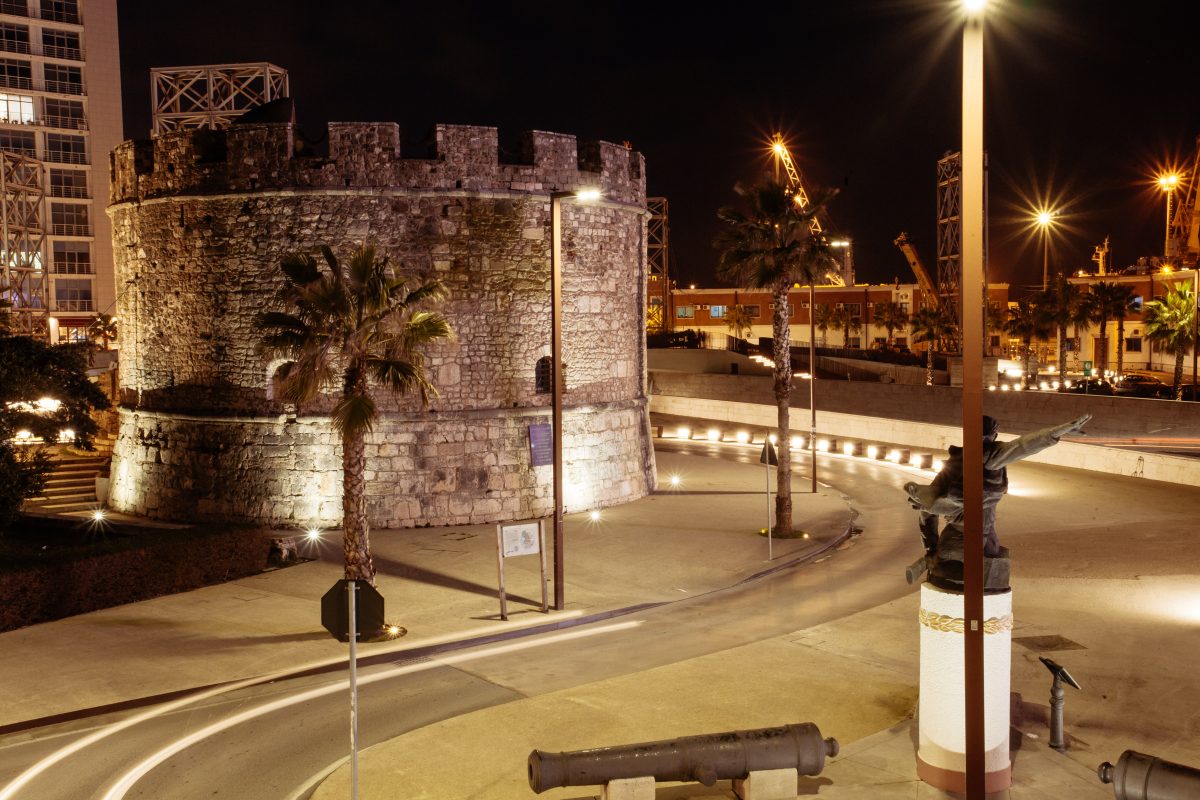
VENETIAN TOWER
Kulla rrethore (Torra), u ndërtua në shek. XV-të mbi kullën bizantine. Kjo dëshmohet nga prania e blloqeve nga rrethoja e mëparshme, e fragmenteve arkitektonike dhe e relieveve antike. Kulla ka diametrin 16m dhe lartësinë 9m. Në kullë hyet nëpërmjet një porte në formë harku me tulla. Kulla është e pajisur me 5 frëngji dhe 3 ndarje (kthina). Perimetri sipër mbyllet me bedena. Ambienti i brendshëm është ndërtuar me tulla në formë kupole. Ngjitja në lartësi bëhet nga brenda, me shkallë të ngushta e të pjerrta.
ROTONDA, BYZANTINE FORUM
The Byzantine market square was built in the traditional center of ancient Dyrrachium. It had a central position in relation to the large public and religious buildings of the Byzantine period. Its architectural appearance testifies to the function of an open, circular market square with a portico. In the center of the market square there is a podium and a well, on a bed of marble slabs that cover the floor up to the colonnade with a perimeter of 40m. Around this radial portico were built service areas. The construction technique, the material used and the cultural layer date this monument as contemporary with the public buildings of the emperors Anastasius and Justinian at the beginning of the 6th century AD.
ANCIENT TERMS
Termet publike (poshtë Qendrës Kulturore “Aleksandër Moisiu”, Durrës) u zbuluan pothuajse plotësisht në vitin 1960. Për nga madhësia dhe ambientet e brendshme, këto terme kanë qenë pjesë e gjimnazit të qytetit. Në to ruhen harqet e furrës, muret si edhe dyshemeja e ambienteve. Në fillim është dhoma e apodyteriumit (dhoma e zhveshjes) që pasohet nga tepidariumi (dhoma e djersitjes) e cila ka nën dysheme tulla hipokauste për kalimin e avullit të nxehtë. Në vazhdim, në drejtimin jugor, është frigidariumi (dhoma me ujë të ftohtë) dhe në fund pishina. Shtrimi i dyshemes është me pllaka mermeri, bardh e zi, në formë fushe shahu. Në jugperëndim të Termeve, ndodhet kompleksi i kanaleve shkarkuese dhe mbi te shtrihet rruga kryesore e periudhës romake me drejtim verior (Rruga “Aleksandër Goga”) .
ARCHAEOLOGICAL MUSEUM
Muzeu Arkeologjik është përuruar më 13 prill 2002 mbi bazën e materialeve të Muzeut të parë arkeologjik, i hapur më 13 mars 1951. Ekspozita është organizuar në tre pavione sipas periudhave historike. Salla e parë fillon me vitrinën e gjetjeve prehistorike në qytet dhe në zonat përreth. Në rend kronologjik ndiqet pandërprerje historia e qytetit në periudhën arkaike, klasike dhe qytetare ilire deri në shek.I p.e.re. Në vazhdim shpaloset zhvillimi topografik, ekonomik, politik e kulturor i Dyrrachiumit romak. Në aspektin tematik ky qytet dëshmon praninë e një popullsie autoktone ilire me botë të pasur shpirtërore. Durrësi paraqitet qendër me ekonomi shumëdegëshe dhe që tregtonte me shumë qendra mesdhetare. Periudha mesjetare përshin 15 shekuj, nga shek. V-XV dhe mbyllet me periudhën turke.
MAUSOLEUM OF THE MARTYRS
It is a memorial object for the fallen of World War II and the Nazi camps. The mausoleum was designed by architect Kristo Sotiri (1870-1953). Works began in 1947. It is the first and only of its kind, as a mausoleum in our country. The complex of the “Martyrs’ Mausoleum” has an arch-shaped plan. It consists of three main parts: the Mausoleum building, the staircase and the garden. The remains of the martyrs are placed in special niches (chambers). While for those who fell in the Nazi camps, memorial graves (graves without bones) were used. On two marble slabs, the names of those interned in the Nazi camps are written in bronze letters.
BASILICA OF “SAINT MICHAEL” ARAPAJ
The Basilica of ‘St. Michael’ is a cult building from the beginning of the 6th century, during the time of the Byzantine emperor Justinian (527-565). It is located 6 km from Durrës on the western side of the “St. Michael” hill, opposite the “Iliria” beach. It has been completely excavated and measures 65x28m. Architecturally, it represents a three-nave basilica with three corresponding apses. It has two side annexes to the north and south as well as an atrium (inner courtyard with colonnades). Adjacent to the southern nave is a monumental tomb (martyrium), covered with a layer of mosaic treated in two emblems, with subjects from early Christianity, with an area of ​​54m². The selected motifs, figures, working technique, multicolored stones classify this mosaic as a unique work of art from the Byzantine period of the 6th century, the work of the mosaic masters of the city of Durrës.
EARLY CHRISTIAN BASILICA (GJURICAJ)
Në Ishëm është ndërtuar Bazilika, e njohur sot si Bazilika në Gjuricaj. Në gjëndjen e ruajtur sot ajo ka përmasa 47 X 20 m. Kisha është e tipit bazikal, njëkonshe me tre Nefe. Në një kohë me të vonë (shek.VII-të), brenda nefit qendror është adaptuar një kapele e vogël. Nga monumenti ruhet në një gjëndje relativisht të mirë një pjesë e mureve, dyshemetë dhe disa detaje arkitektonike prej mermeri. Sipas studiuesit Halil Myrto, objektet e zbuluara në këtë Bazilikë, datojnë në shekullin e IV – III p.e.s, si dhe në shekullin V–VI të e.s. Kisha është e ndërtuar me muraturë guri dhe breza prej 5 rradhë tullash të lidhura me llac gëlqeror. Mbi dyshemenë e objektit janë gjetur detaje arkitektonike prej mermeri si: kolona (të fragmentuara), kapitele, imposte, pllaka ikonastasi e pllaka të tjera me dekoracion në reliev. Sipas autorit janë zbuluar dhe objekte që dallohen në periudhën helenistike, në shekujt e parë të erës sonë, si dhe në mesjetën e mesme e të vonë.
THE FORTUNE FORTUNE
Kështjella u ndërtua në vitet 1572 – 1574, nga feudali vendas, Mehmeti, me porosi të Portës së Lartë Osmane. Pas përfundimit të punimeve kështjella u pajis me topa dhe në të u vendos një garnizon ushtarësh. Kështjella me planimetri ketërkëndëshe (100 X40 m) ka dy porta, dhe 5 kulla vrojtimi. Nga burimet historike njihet me saktësi si qëllimi dhe koha e ndërtimit të saj. Gjatë shekullit të XVI –të, Ishmi përfshihej në Sanxhakun e Ohrit që ishte një krahinë e mbushur me revolta fshatare dhe trazira për perandorinë Osmane. Për këtë arsye edhe feudali Mehmet i propozoi Portës së Lartë që të ndërtohej një kala në Ishëm, e cila do të ruante vilajetin nga kryengritësit, me kusht qe t’i jepej Sanxhaku në sipërmarrje për mbledhjen e detyrimeve fiskale të shtetit. Kështjella është ndërtuar mbi një kodër në lindje të fshatit Ishëm. Prej saj, shikimit i hapet një horizont i gjerë. Nga veriu dhe lindja vrojtohen fusha pjellore e Ishmit dhe shikimi ndahet në vargmalin Krujë – Dajt, ndërsa nga perëndimi vrojtohet grykëderdhja e lumit, Kepi Rodonit dhe një pjesë e bregut të Detit Adriatik. Muret forcohen nga pesë kulla të cilat me përjashtim të një kulle këndi me planimetri rrethore dhe një tjetre pesëkëndëshe, kanë forma drejtëkëndëshe. Kulla e I-rë dhe kulla e II-të janë ruajtur në lartësinë e mureve, ndërsa kulla e III-të, IV-të dhe e V-të, janë të rrënuara. Prej tyre ruhen në rrafshin e tokës vetëm muret anësore, ndërsa muret ballore janë zhdukur krejtësisht.
MEDIEVAL HAMMAM
The hamam (bath) is a public building with typical architecture of the Turkish period. It was built in the 18th century in the southeastern corner of the medieval city. In the center there was a spherical dome with a height of 5.8 m, equipped with 12 small windows for ventilation. The premises were heated with steam through ceramic pipes. The oven is located in the back of the hamam. It was badly damaged and was reconstructed in 1980.
TOP-HANA WELL
Emërtimi Top-Hane tregon funksionin fillestar si punishte për prodhimin e barutit. Prania e burimit të ujit në lagjen Varosh (jashtë kalasë), krijoi mundësinë e ndërtimit të një pusi në shërbim të banorëve të saj, rreth shek. XVI-të. Pusi u ndërtua mbi një bazament katërkëndësh me gurë, rrethuar me katër kolona graniti të periudhës bizantine të cilat ishin tcilat ishin të ripërdorura.
"ALEKSANDER MOISIU" HOUSE MUSEUM
Shtëpi me çardak e ndërtuar në gjysmën e dytë të shek. XIX-të. Në vitet ’30 të shek. XX-të ka qenë edhe seli e konsullatës angleze. Kjo ndërtesë për vlerat e saj arkitekturore është shpallur “Monument Kulture”. Pas restaurimit të saj në vitin 1983, u vendos “Ekspozita e Kulturës Popullore”. Në tre dhoma ekspozite, shpalosen vlerat artizanale të trevës së qytetit tonë dhe të rrethinave të tij. Dy dhoma të tjera i janë kushtuar figurës së aktorit me origjinë shqiptare Aleksandër Moisiu, emërtuar “Dhoma Muze Aleksandër Moisiu”. Moisiu kreu shkollën fillore në Durrës, dhe për këtë arsye në vitin 1928 shkroi kujtimet e tij në formë skice me titull “Ëndërr fëmijërie”.
“FATİH” MOSQUE
The "Fatih" Mosque dates back to the time of Sultan Mehmet II the Conqueror (Fatihu). It is the oldest Islamic religious building in our country. It was built around 1502-1503, built on the ruins of a Christian religious building (a basilica from the 11th century).
ALBANIAN STATE BANK, Durrës
The Bank of Albania “BKT” was built in 1928. Its foundations are on the southeastern tower of the Byzantine wall, called the “Great Bastion”. The building was designed by Italian architects and built by Durrës masters. Compositionally, this building belongs to the works of the Baroque style, which was used for the first time in our country. A human sculpture (woman) is placed on the Bank, which symbolically represents the war, resistance and victory over the centuries and the prosperity of the country.
PALACE OF KING “ZOG I”
The royal palace was built in 1937. It was designed at the highest point of the hills (98 m) and has a dominant position in relation to the city and the sea. Architecturally, it represents the building style (neo-classical) used at the beginning of the 20th century. On the front facade of the Villa, the figure of the national hero Gjergj Kastriot Skenderbeu stands out, placed in profile to the right, on horseback and with a sword in hand.
MEMORIAL OF “MUJO ULQINAKU”
Memoriali i kushtohet Mujo Ulqinakut (1896-1939), “Hero i Popullit”, një ndër luftëtarët e parë të qëndresës së armatosur kundër pushtimit fashist italian më 7 prill 1939. Memoriali u realizua nga “Skulptori i Popullit” Kristaq Rama. Mujo Ulqinaku lindi në qytetin e Ulqinit në familjen e një detari. Kishte gradën nënoficer në repartin e marinës në Durrës. Ai u pozicionua në vijën e parë të luftimit që në orët e para të pushtimit fashist italian. Mujo Ulqinaku dhe bashkëluftëtarët e tij, me qëndresën dhe patriotizmin e tyre treguan trimëri të pashoq.
CITY COUNCIL
The Durrës City Hall was built in 1929, on the traditional city square. The city hall is designed with three floors and basements. The first floor, at the entrance to the facade, is treated with three arches, while the second floor above it has an internal balcony with columns. The building culminates with a square tower, on the left, where the City Clock is also located. The facade is decorated on both sides with relief decorations in the form of medallions, which have the symbols of a sailing ship as well as a sheaf of wheat ears.
TRADE ROAD
"Rruga Tregtare”, sot “Bulevardi Epidamn”, u ndërtua pas dëmtimeve që shkaktoi tërmeti i vitit 1926. Me hapjen e kësaj rruge fillonte dhe zbatimi i një plani rregullues modern i qytetit të Durrësit sipas treguesve urbanistikë të zhvillimit të qyteteve evropiane. Në të dy anët e kësaj rruge u ngritën ndërtesa dy e tre katëshe (vila), të stilit të arkitekturës bashkëkohore, me dekor të larmishëm. Katet e sipërme shërbenin për banim ndërsa katet e para ishin për tregtim, prejt të cilave mori edhe emrin “Rruga tregtare”. Ato ruhen ende sot si përfaqësuese të ndërtimeve arkitekturore të viteve ’30-40 të shek. XX-të
“ST. LUCIA” COUNTCATHEDRAL
The Catholic Church "St. Lucia" with a bell tower, was built in 1909. The church represents a religious building with its respective functional premises. It is also known as an important center where the patriotic cleric Dom Nikoll Kaçorri (1862-1917) celebrated mass. This personality with a good reputation among citizens was also the initiator and supporter of the ideas of the patriotic movement for the teaching of the Albanian language and for the independence of Albania. In the cell of this church, the patriots of Durrës gathered, from where important decisions were made that influenced the historical events of the city, such as the raising of the national flag in Durrës on November 26, 1912.
MEDIEVAL CISTERN
The Water Tank or Depot is a construction from the late Middle Ages and is located behind the Mausoleum of the Martyrs. The water was collected from the natural springs of the hilly area. It is a building with a vaulted roof covered with tiles and surrounded by buttresses. It has five entrance steps and an arched door above which there is a circular window for ventilation.
APARTMENT 115 of the Manushi and Pali family
The house was built in 1884, the date of which was written in iron letters on the semi-arch of the main gate along with the initials Z.M., the name of the owner Zis Margariti. This house served as the residence of the Austro-Hungarian consulate (legacy) in 1914.
CHURCH OF “THE APOSTLE PAUL AND SAINT AST”
Kisha e Apostull Pavlit dhe Shën Astit u ndërtua gjatë viteve 1994-2002, dhe u përurua më 3 Maj 2009. Apostull Pavli njihet si predikuesi i parë i fesë së krishterë në Iliri. Në kujtim të tij ka qenë ndërtuar një kishë në skajin verior, në ”Kepin e Palit” sot ”Kepi i Pallës”. Shën Asti është martiri i parë, i cili u martirizua në vitin 100 të e.re. në Durrës, në periudhën e perandorit romak Trajan (98-117).
THE GREAT MOSQUE
Xhamia e Madhe u ndërtua në vitin 1938. Pozicioni i zgjedhur topografik me fasadë nga Lindja plotëson ansamblin e ndërtimeve publike në sheshin qendror të qytetit. “Lëvizja kundër fesë, paragjykimeve fetare dhe zakoneve prapanike” e 6 shkurtit 1967, prishi kupolën dhe minaren e saj, dhe e transformoi në institucion kulturor, emërtuar “Pallati Rinia”. Pas viteve ’90 Xhamia e Madhe u rikthye në funksionin e saj si ndërtesë kulti dhe e ruajti arkitekturën fillestare. Ndërtimet u kryen në dy faza: gjatë viteve 1992-1994 dhe më vonë gjatë viteve 2004-2006.
THE TOWER OF "SULEJMAN'S TOWER"
The Sulejman Kulla Tower is located in the village of Kullas i Ishmit. It is the only tower in the Durrës district. It was declared a Cultural Monument around 1983. It is a three-story building built of stone. The tower has about 20 battlements, which served to protect the tower in case of attack. The first floor of the tower served as a warehouse, while the other floors were for living. The tower also has two balconies that served the residents. The tower was restored around 1988. Today it is in functional conditions and can be visited.
FORTIFICATION OF CAPE RODON
Ndër fortifikimet e ngritura nga Skënderbeu për të mbrojtur vendin në luftën kundër pushtimit Turk, bën pjesë dhe Kështjella në Kepin e Rodonit, e njohur me toponimin “Kështjella e Skëndërbeut”, e cila është ndërtuar rreth vitit 1460. Kështjella kishte planimetri drejtëkëndeshe dhe ishte e pajisur me 4 kulla mbrojtese në çdo qoshe të saj. Ajo u rrënua nga Turqit në vitin 1467 dhe u rindërtua nga Venediku 33 vite më vonë. Në ditet tona ruhen kryekulla me lartësi 10 m, dhe disa mure mbrojtëse me trashësi 3.5 m.
HOLY CHURCH – NDOIT in the Muzhli of Skanderbeg
Kisha e Shën – Ndoit ndodhet afër bregut të detit në veri të kalasë së Skëndërbeut në Kepin e Rodonit. Kisha i përket tipit arkitekturor romaniko – gotik dhe është ndërtuar në fund të shekullit të XIII-të. Burimet e shkruara përmendin se në afërsi të Kepit kishte edhe tri kisha të rëndësishme: Kisha e Shën – Marisë, ajo e Shën Anastasisë dhe e Shën Kollit, ku ushtronin aktivitetin e tyre kuvendet françeskane. Në muret veriore e jugore të Kishës kalojnë mbi pilastra harqe të verbër me profil të mprehtë. Në murin lindor ndodhet absida gjysëm rrethore, në brendësi dhe në anën e jashtme. Brenda kishës, mbi muraturë shihen dy shtresa pikture murale. Sipas historisë thuhet se Skëndërbeu ka kaluar pushime për rastin e martesës së tij. Kisha është restauruar në vitin 2003.
PORTO-ROMAN WALL
Nga Muri i Porto Romanes, rreth 7 km në veri të qytetit të Durrësit, ruhen ende dhe sot mbetjet e një muri që mbyllte dikur rripin e ngushtë të tokës, nëpërmjet detit dhe kënetës. Hezei i përmend shkurt këto ndërtime, duke vënë në dukje se muret mbyllin sistemin që kishte një gjatësi jo më tepër se 200 m, dhe sistemi i tyre me breza tullash paraqiste një ngjashmëri të madhe me pjesët më të rregullata dhe me të vjetra të rrethojës së madhe të Durrësit. Sipas studiuesve muri verior që mbyllte ngushticën, ishte i pajisur me kulla këndrejtë të vendosura në largësi të barabartë.
_MG_5950
P1455219
sf

HISTORIKU I QYTETIT​

Durrësi mund të krahasohet me qytetet më të mëdhenj të Mesdheut antik dhe mesjetar. Qyteti Epidamn – Dyrrah u ndërtua nga Ilirët Taulantë, dallëndyshasit në shekujt Xlll-XI p K. Në kushtet e një klime mesdhetare, zona më e përshtatshme për banim ishte ajo e lumit Erzen si dhe Ultësira Perëndimore përreth saj. Në bregdetin e Gjirit të Durrësit u vendos qendra e parë apo Limani me emrin Dyrrah. Sipas autorëve antikë, ky qytet u themelua nga dy mbretër me origjinë ilire të quajtur Dyrah dhe Epidamn. Në kohën e Perandorit Anastasi I (491-519) dhe Justianani I [527-565), qyteti pësoi transformime të ndjeshme në strukturën urbane duke marrë tiparet e një qyteti tipik bizantino-kristian.

Në shek. Xl-XV, Shteti Shqiptar njihet me emrin Shteti i Arbrit. Ky shtet, kulmin e tij e arriti në periudhën e mbretërimit të Gjergj Kastriotit. Sipas kronikaneve Osmane të shek. XVl, Durrësi apo siç e cilësojnë ata “Kostandinopoja e Dytë”, u pushtua nga turqit me 13 Gusht1501. Vetëm në shek XVll, qyteti filloi të rimarrë veten duke u bërë qendër e tregtisë tranzite dhe skela kryesore e Shqipërisë së Mesme.

Më 26 Nëntor në Durrës ngrihet flamuri i Pavarësisë, nga një grup patriotësh të kryesuar nga atdhetari Ismail Qemali. Sundimit turk i kishte ardhur fundi, por duket se qytetin e lakmonin invazione të tjera: pushtimi serb (1913), ai austro-hungarez (1916) dhe pushtimi italian (1918).. Gjatë viteve të monarkisë shqiptare (1924-1939), Durrësi fitoi një frymëmarrje të re dhe qytetaria fisnike durrsake e bëri qytetin e vet model të zhvillimit ekonomik kapitalist. Më 7 Prill 1939 qyteti dhe rrethinat e tij u pushtuan nga trupat e ushtrisë italiane dhe gjermane dhe më 14 Nëntor 1944, Durrësi u çlirua. Periudhës së sistemit socialist (1945-1990), i përkasin investimet në disa degë të industrisë, kolektivizimi i bujqësisë, masivizimi i arsimit, ngritja e një seri objektesh social-kulturore. Në fillim të viteve ’90 zunë fill normat e para të sistemit demokratik me shumë probleme për fazën e tranzicionit, por me perspektivë për të ardhmen. Sistemi i ri dhe reformat ekonomike që u zbatuan në Shqipëri dhe në Durrës pas vitit 1990, sollën transformime të ndjeshme në jetën ekonomike.


KULTURA DHE ETNOGRAFIA


Durrësi është një qytet me kulturë të hershme, për vetë origjinën e tij të lashtë. Qyteti ka trashëguar mjaft vlera të së kaluarës, qendra historike dhe arkeologjike si Amfiteatri, Rrethoja Bizantine, Torra veneciane, Muri rrethues i Kalasë, por edhe qendra kulturore e fetare si rrënojat e Bazilikës në Arapaj, Kështjella e Rodonit etj. Qyteti ruan sot plot gjurmë edhe nga kultura më e vonë, duke kontribuar edhe në dhënien e personaliteteve me vlerë ndërkombëtare si Aleksandër Moisiu, që lindi në Kavajë dhe u rrit e u formua në Durrës. Qyteti ka patur institucione kulturore të konsoliduara, si teatër estrade, ansambel këngësh e vallesh popullore, teatër profesionist, i cili edhe sot jep shfaqe për publikun, trup muzikore profesionistësh etj. Gjithashtu në Durrës organizohen aktivitete në rang kombëtar e ndërkombëtar si, festivali ndërkombëtar i filmit, festivali muzikor i jazz-it, konkursi i poezisë poeteka etj. Etnografia e Durrësit, i përket kulturës së Shqipërisë së Mesme, ku gratë vishen me dimi e me jelekë, në kokë mbajnë një feste të vogel zbukuruar me imitime monedhash, kurse burrat veshin brekushe, xhoka të zeza prej Leshi ose jelekë të kuq, dhe në kokë mbajnë qeleshe me male të sheshtë. Gjithashtu edhe këngët e vallet i përkasin kulturës dhe traditave të Shqipërisë së Mesme.


Kontakte te nevjoshme:

  • Kodi i qytetit/city code :052
  • Kodi postar/post code : 2000
  • Policia/Police:129/22 544/23 151
  • Shqiponja/Eagle :19
  • Sherbimet shendetesore/Health services : 127/22 222/
  • Zyra turistike/Tourist office :Tel 22 177